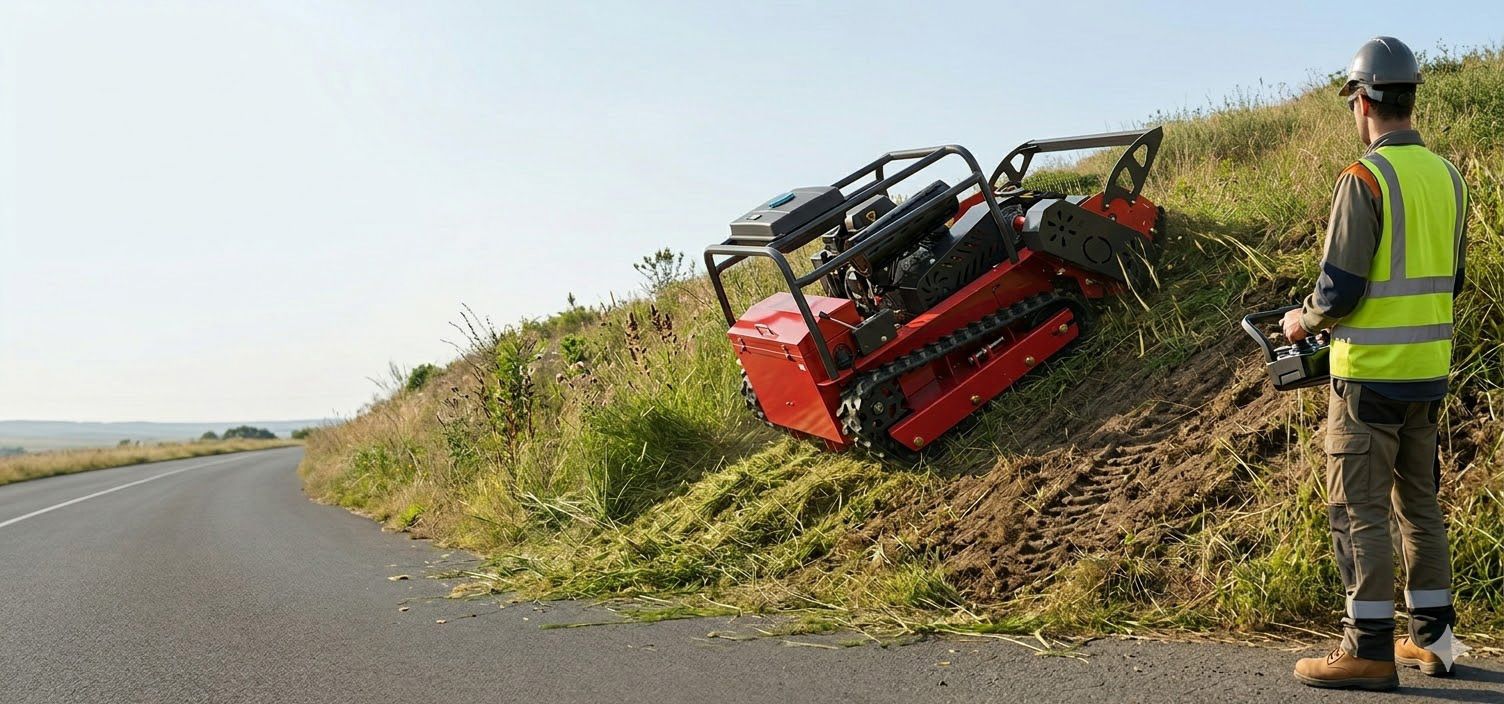
Remote-controlled mowing for embankments, maintained slopes and hazardous banks
Use this route when operator safety, traction, distance operation and dense growth on slopes matter more than a simple mowing-width decision.
Open GuideThese application guides are the decision layer between Products, Compare and quotation. Start here when the real question is about slope safety, orchard-lane access, vineyard rows, rough grass under rows or the risk of choosing the wrong machine family for the site.
These are the first two application pages to prioritize because they align with the current product families, compare routes and most valuable buyer decisions.

Use this route when operator safety, traction, distance operation and dense growth on slopes matter more than a simple mowing-width decision.
Open Guide
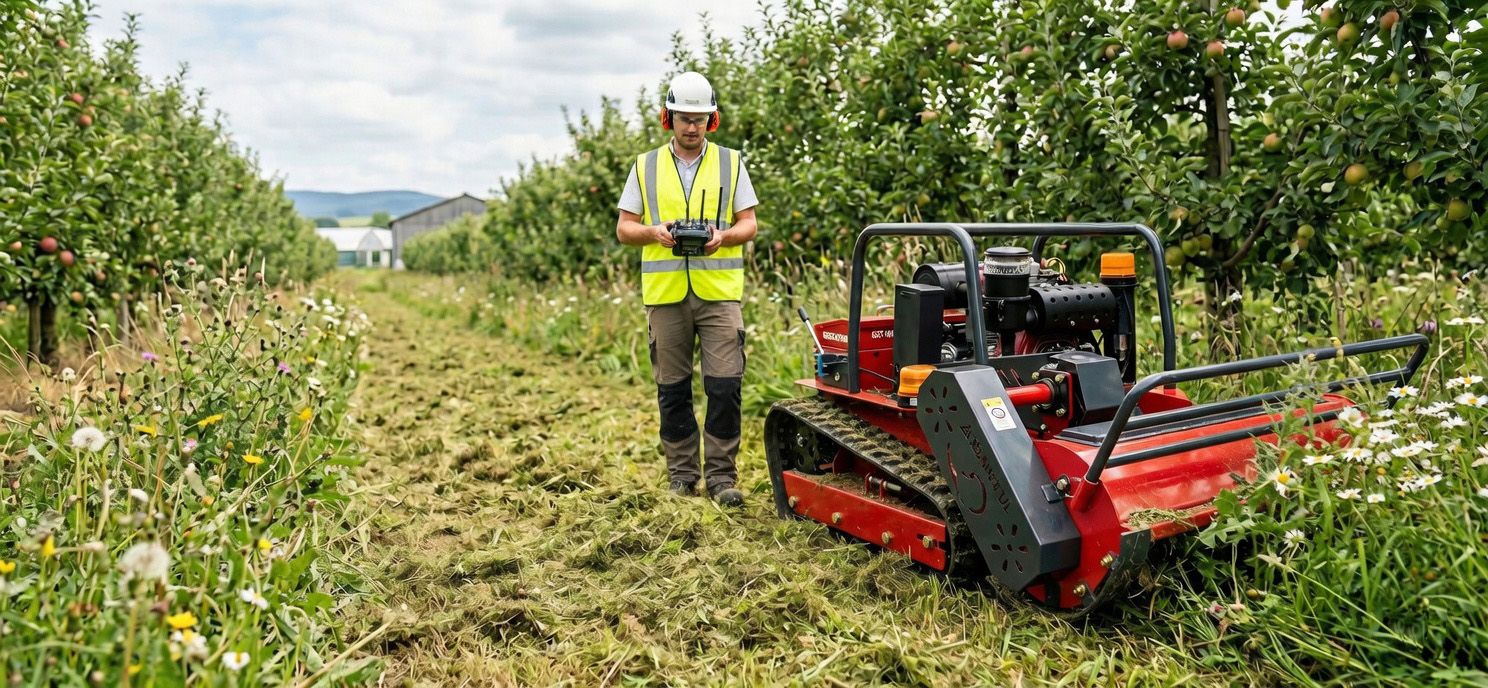
Use this route when lane width, turning space, transport between plots and rough grass under rows matter more than headline deck width alone.
Open GuideApplication pages should narrow the family route first. Model-level comparison comes next, after the buyer already understands the terrain, vegetation and access pattern.
Best when compact access, orchard lanes, easier transport and cleaner routine mowing still matter most.
Best when rough grass, denser vegetation, maintained slopes and broader daily productivity matter more than compactness.
Best when the project already needs flagship control, standard industrial remote, hydraulic lift standard and a stronger premium route.
A useful applications hub should capture search intent, explain the site problem, reduce wrong-model risk and keep the visitor moving toward Products, Compare, Dealers, Support and quotation.
Use application pages to identify what ordinary mowing equipment struggles with: steep banks, unsafe manual mowing, orchard-row width limits, rough grass under rows and mixed terrain.
Once the terrain and vegetation pattern are clear, route the buyer into the mower family, standard flail family or flagship family instead of dropping them into every model at once.
Use compare guides when the buyer is choosing between compact access and broader coverage, 800 mm and 1000 mm, or standard versus flagship 1000 mm.
Application pages should keep the next commercial step visible: request quotation, ask for model guidance, dealer discussion or support/documentation routing.
Application pages help buyers start with the site problem first. That reduces wrong-model risk and makes the next route into compare pages, product families and quotation more accurate.
Start with Slope Maintenance when hazardous banks, embankments and maintained slopes are the main problem. Start with Orchards & Vineyards when orchard lanes, vineyard rows, under-row grass and transport between plots are the main problem.
No. Application pages explain the job context and machine-family fit. Compare pages then answer which model fits better inside that route.
Tell us whether the site problem is mainly slope work, orchard-row access, rough grass under rows or a broader model-choice question. We will route you into the right family, compare page and quotation path.